
Caltech Astrophysicist Carl Grillmair Dies at 67
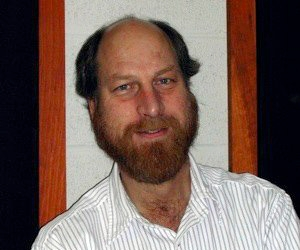
Carl Grillmair, an astronomer at Caltech’s IPAC science and data center for astronomy and planetary science, died on February 16. He was 67. His death has shaken the Caltech community, where colleagues remember as both a creative scientist and a foundational member of IPAC’s research programs.
Grillmair spent nearly three decades at Caltech after joining IPAC in 1997. Over the course of his career, he contributed to major NASA missions and research programs spanning exoplanets, galactic structure, and the remnants of ancient collisions between the Milky Way and smaller galaxies. He discovered dozens of stellar streams — structures formed by those long-ago interactions — and was lead author on a landmark 2007 study that captured enough light from exoplanets to identify molecules in their atmospheres for the first time.
“He was part of IPAC’s bedrock for many years, and his passing impacts all of us across IPAC,” said Tom Greene, IPAC’s executive director.
Born in Calgary, Alberta, Grillmair studied astrophysics at the University of Calgary before earning a master’s degree from the University of Victoria and a PhD from the Australian National University. His research career included work with the Spitzer Space Telescope’s Infrared Spectrograph and Infrared Array Camera instrument teams, as well as roles in the NEOWISE asteroid-hunting mission and NASA’s upcoming Near-Earth Object Surveyor project.
Grillmair’s colleagues emphasized both the breadth of his scientific work and his distinctive approach to discovery. “It was always a pleasure to experience Carl’s creativity in doing science,” said Sergio Fajardo-Acosta, an IPAC astronomer who worked alongside him for decades. “His methods on exoplanets and galactic structure studies were truly detective work.”
According to authorities, Grillmair was fatally shot at his rural home in Llano, in the Mojave Desert region of Los Angeles County. A 29-year-old local resident, Freddy Snyder, has been arrested in connection with the killing. Investigators say the two men were not known to each other and that no clear motive has been identified. Snyder is expected to be arraigned later this month.
The desert home where Grillmair lived was chosen in part for its isolation and dark skies, ideal for observing the night sky. Friends say he maintained a small personal observatory there and often spent evenings studying the cosmos.
Beyond astronomy, Grillmair was known as an avid pilot who flew small aircraft and gliders, and as someone who loved outdoor work and maintaining his desert property. Over his career he published 147 peer-reviewed papers and received the 2011 NASA Exceptional Scientific Achievement Medal, among other honors.
He is survived by his wife, Louise. Colleagues at IPAC have dedicated the center’s weekly science talk series, The Next Seven Minutes, to his memory.