
Caltech Wildlife: Hummingbirds
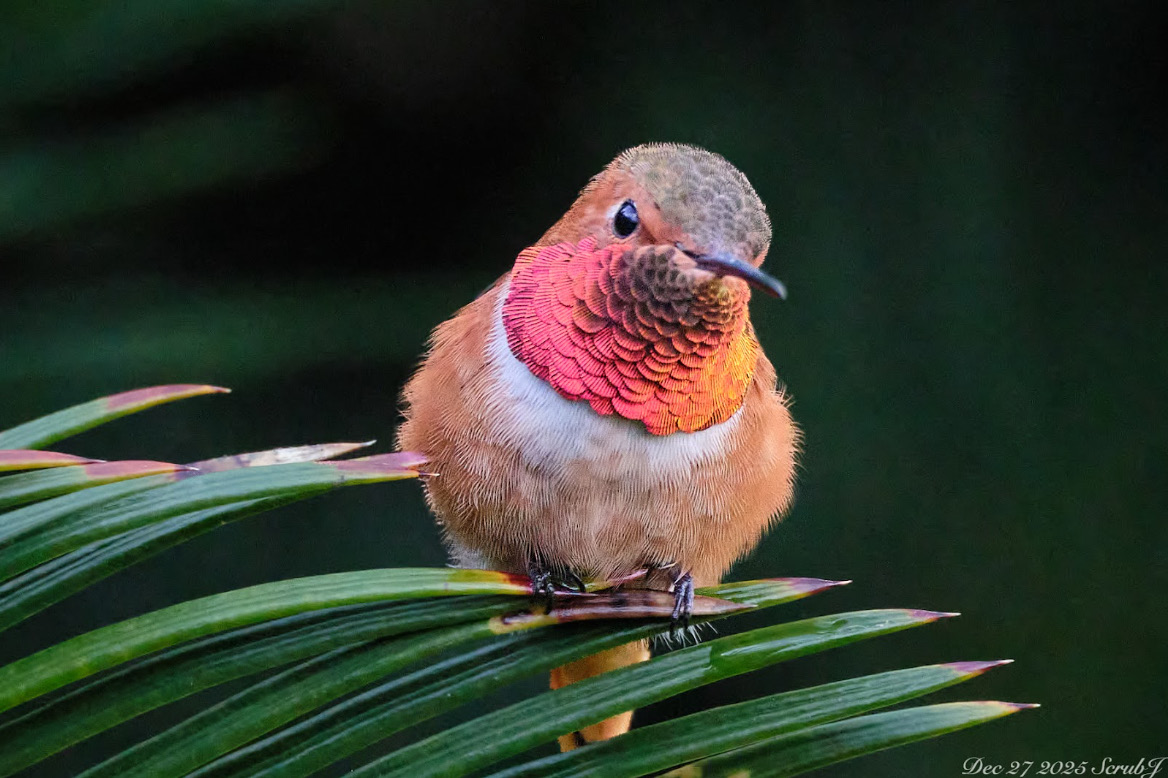
A male Allen’s hummingbird with his reflective metallic gorget.
Did you know that hummingbirds are a family of birds found exclusively in the Western Hemisphere (here chants the Bad Bunny version listing all American countries)? When I first arrived at Caltech, I found these hovering drones such a blessed sight. People here love hummingbirds — proved by the abundance of nectar feeders around the graduate student housing and in the front yards of many fancy Pasadena homes. A hummingbird feeder might be your easiest connection to nature! And here is a dedicated guide to identifying hummingbirds on campus, plus a few tips on how to get along with them.
There are two main species of hummingbirds on Caltech campus: Anna’s hummingbird and Allen’s hummingbird. I know — these names give you absolutely no hint about what they look like. “Allen’s” commemorates the taxidermist Charles Andrew Allen, who first documented them in California in 1879, and “Anna’s” honors Anne d’Essling, the wife of an ornithologist. During that boom of species discovery, ornithologists were free to name birds after friends and lovers, much like how we arbitrarily create our Discord usernames nowadays. In Mexican cultures, hummingbirds are considered messengers between the living and spirits, so perhaps naming them after your loved ones would help you communicate with them.
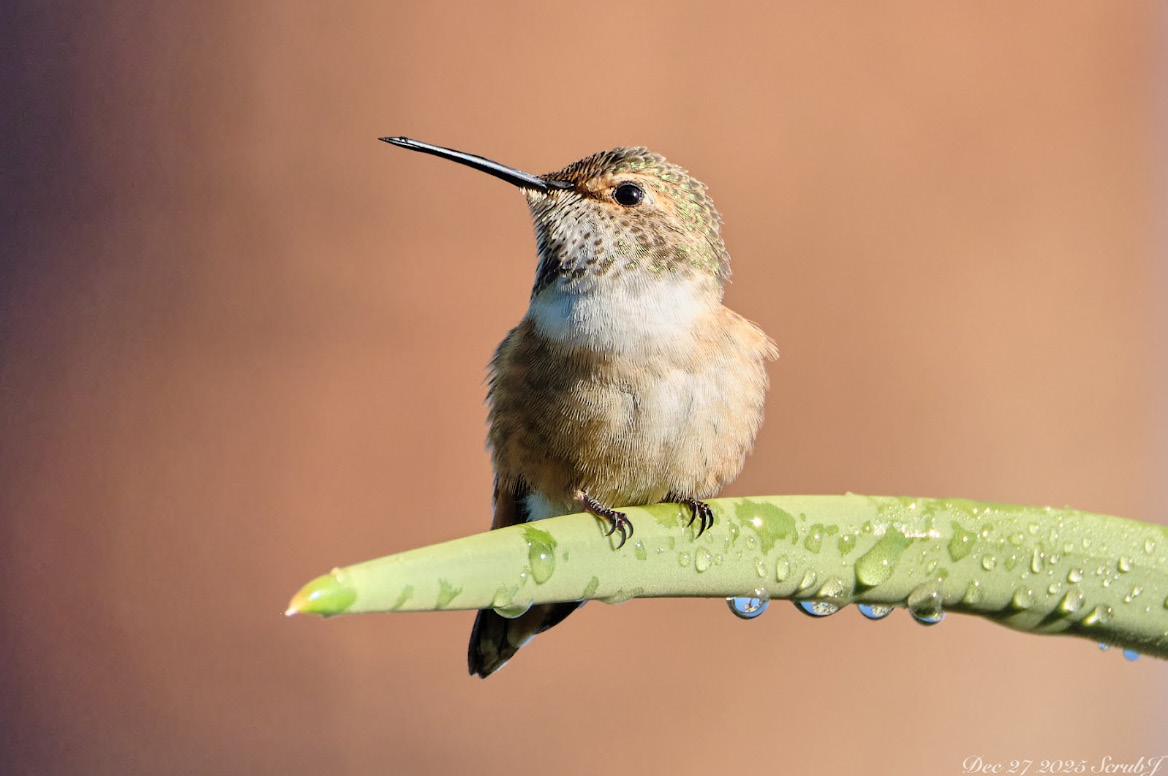
A proud female Allen’s hummingbird perched with its tiny feet.
The most telling difference between Anna’s and Allen’s hummingbirds is color. The first color you’ll notice on a hummingbird around here is a metallic green — this is shared by many species. When I first set up my nectar feeder, my work-from-home housemate was the first to witness its inaugural visitor after a month of quietness. He came to me with exciting news, only to describe it as “a green bird.” A correct first impression — but not quite enough for species identification.
To tell them apart, look at the front of their bodies: their chins and bellies carry species-specific colors. Anna’s hummingbird shows shades of pink, like Lady Anne’s dress. Male Anna’s have a striking, large pink gorget that can flare across the entire head in the sunlight, while females sport a modest little pink “necktie.” Allen’s hummingbird, in contrast, is shaded with mainly orange. In certain light it may look a bit pink, but be sure to check the belly. Allen’s males and females both show orange wash on the flanks and belly, whereas Anna’s do not.
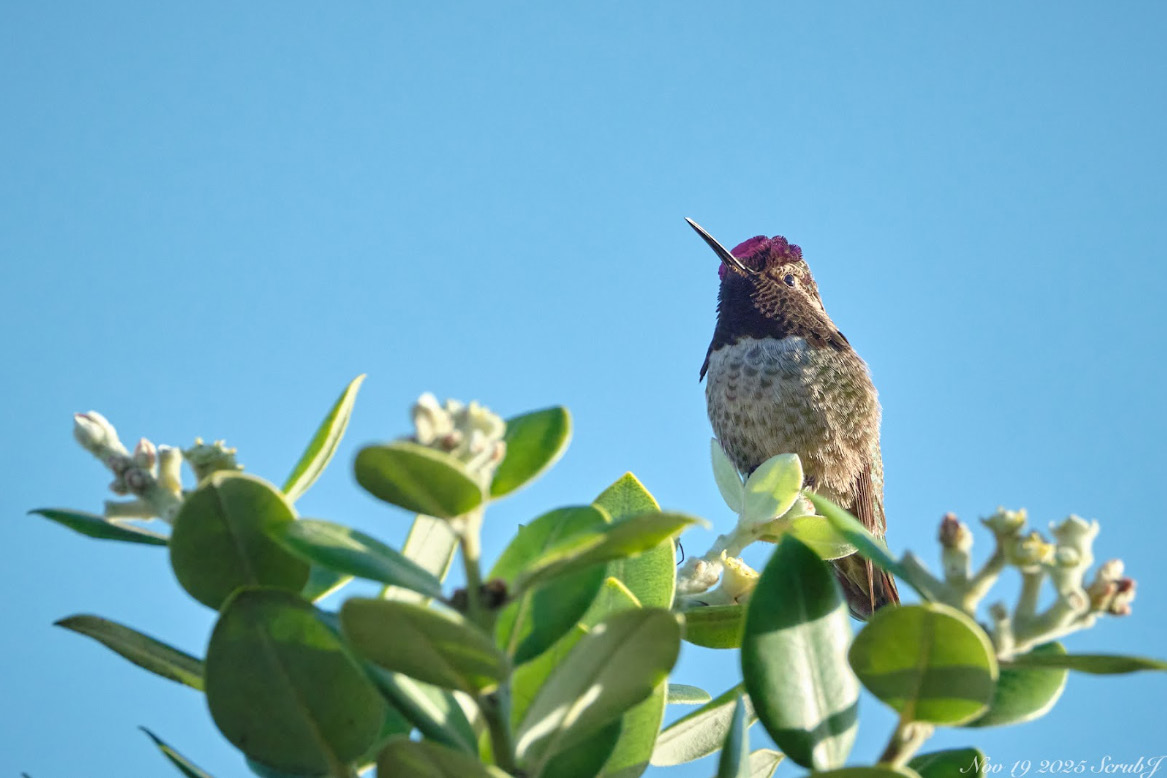
Hummingbird feathers may look dark when backlit, but the lack of orange and the pink forehead gives away the identity of this male Anna’s hummingbird.
Hummingbirds are quite sexually dimorphic — the differences between males and females might trick you into thinking they are separate species (a classic beginner’s trap, much like mistaking male and female mallard ducks). At this time of year, adults are breeding and fledglings have not yet appeared, so it is usually safe to assume that those with brilliant, full-head metallic feathers are males, while the more understated individuals are females. I’ve attached four photos I took of local hummingbirds for reference.
Despite their different appearances, males and females are equally territorial. They emit high-pitched zipping calls above the flowers or feeders they claim, and they will dive-bomb any intruders. If you watch closely, you can detect a clear pecking order ranked by age and experience. They sometimes even scold finches or squirrels perched nearby, even though those animals are unlikely to compete for the delicate nectar diet that hummingbirds’ long and thin bills are specialized for.
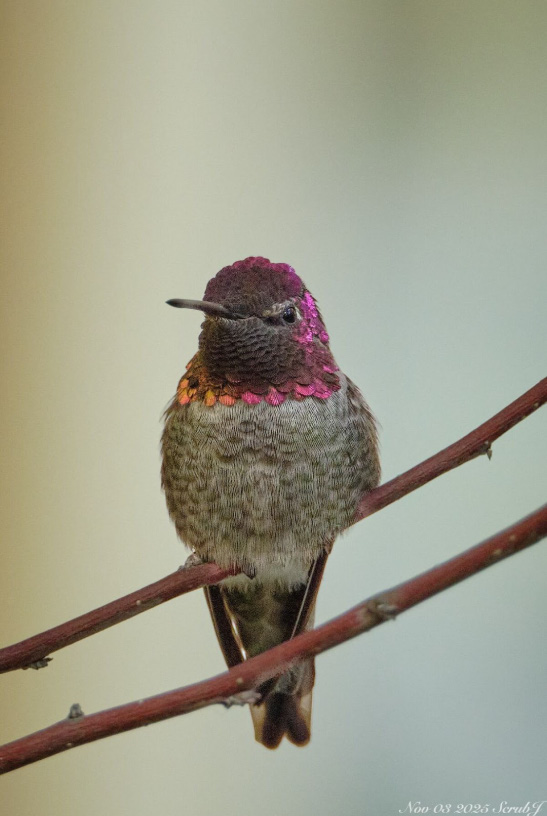
The resident male Anna’s hummingbird for my feeder. I named him Nicolas.
I keep my hummingbird feeders by the window, which allows me to watch them closely from behind the curtains. They clearly prefer the fake red flowers on the feeder — hence the predominantly red design of most man-made feeders. When they fly in, their wings beat at such a high frequency that you see only a blur; if you are lucky, you can hear the faint buzz resonating through the window. Once comfortable, they often stop hovering and simply perch to feed. Contrary to popular belief, hummingbirds spend much more time perching than actively feeding. Perching allows them to reduce their heart rate, rest, and groom. If you locate the tree guarded by a local hummingbird, you will likely find their favorite branch, like the corner of a couch they prefer for relaxing.
Other hummingbird species in Southern California include Costa’s hummingbird and black-chinned hummingbird (the latter migrates here in spring). They are less common on campus; I have only briefly seen one black-chinned here and have been hoping to attract another with my feeder. It is amazing that simple cane sugar dissolved in water (no dye or supplements needed) can support these tiny creatures. Sharing a bit of your table sugar with your lovely neighbors is not a bad idea. All you need to do is set up the feeder, clean it regularly, and wait patiently for the fairies to patronize your little restaurant once it proves to be a safe spot.
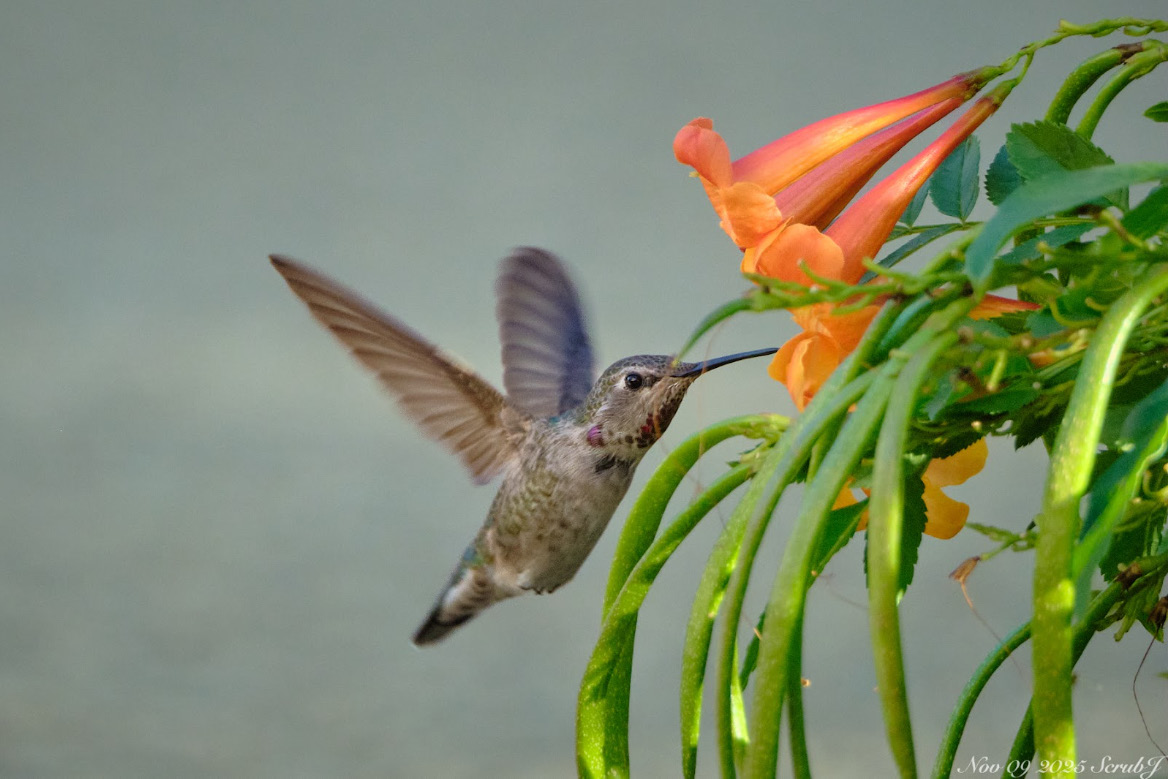
A female Anna’s hummingbird enjoying a sip of nectar behind Browne Dining Hall.
All photos courtesy of Jieyu Zheng.