
Congress Votes to Retain Science Funding, Declines Most Proposed Cuts
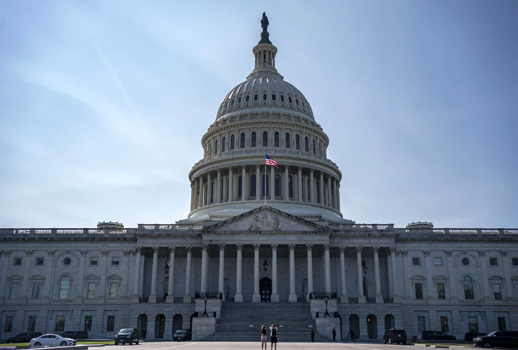
(Photo: Getty Images)
On March 4, the Senate Commerce Committee voted to advance the bipartisan NASA Authorization Act of 2026, authorizing a $24.7 billion budget for this fiscal year, extending operations for the International Space Station through 2032, and — for the first time — backing plans for a permanent crewed presence on the Moon.
“This bipartisan legislation sets an ambitious course for America’s space program, ensuring NASA’s leadership from Earth’s orbit to the Moon and Mars,” said Sen. Maria Cantwell (D-WA), the committee’s top Democrat. Sen. Ted Cruz (R-TX), the committee’s top Republican, likewise said that the measure “brings stability and certainty to NASA and the entire U.S. space program.”
The measure is one of the clearest signs yet that Congress is moving to stabilize federal science spending after months of uncertainty over proposed cuts to research agencies.
At the start of 2026, lawmakers faced sweeping reductions proposed in the White House budget request, including a 23.8% cut to NASA from a year earlier and a 57.1% reduction to the National Science Foundation (NSF). Scientists and research organizations warned that cuts on that scale could disrupt major projects and halt thousands of grants.
In January, however, Congress moved to preserve much of the federal research budget through the annual Commerce, Justice, Science and Related Agencies Appropriations Act. The measure largely avoided most of the proposed reductions and maintained funding for major science agencies close to current levels.
The final version of the appropriations bill, as signed by President Donald Trump, reduced NASA’s budget by only 1.6% and the NSF’s by 3.4% — far less than originally proposed.
Taken together, the January appropriations package and the recent NASA vote reflect a broader pattern of continued congressional support for basic and applied science. Earlier this year, Congress separately approved an increase of more than $400 million for the National Institutes of Health (NIH), including funding for initiatives in cancer research and Alzheimer’s disease.
NASA will “execute our available appropriated funding in accordance with established fiscal policies which respect congressional authorities,” wrote Amit Kshatriya (BS ’00), NASA’s associate administrator and the agency’s seniormost civil servant, last September in response to early questions about potential budget cuts. “NASA will enact the budget appropriated to us.”
For now, the clearest signal from Capitol Hill is that Congress is not prepared to abandon the federal government’s longstanding role as a major backer of scientific research and space exploration.