
What’s With the Dead Grass on South Wilson?
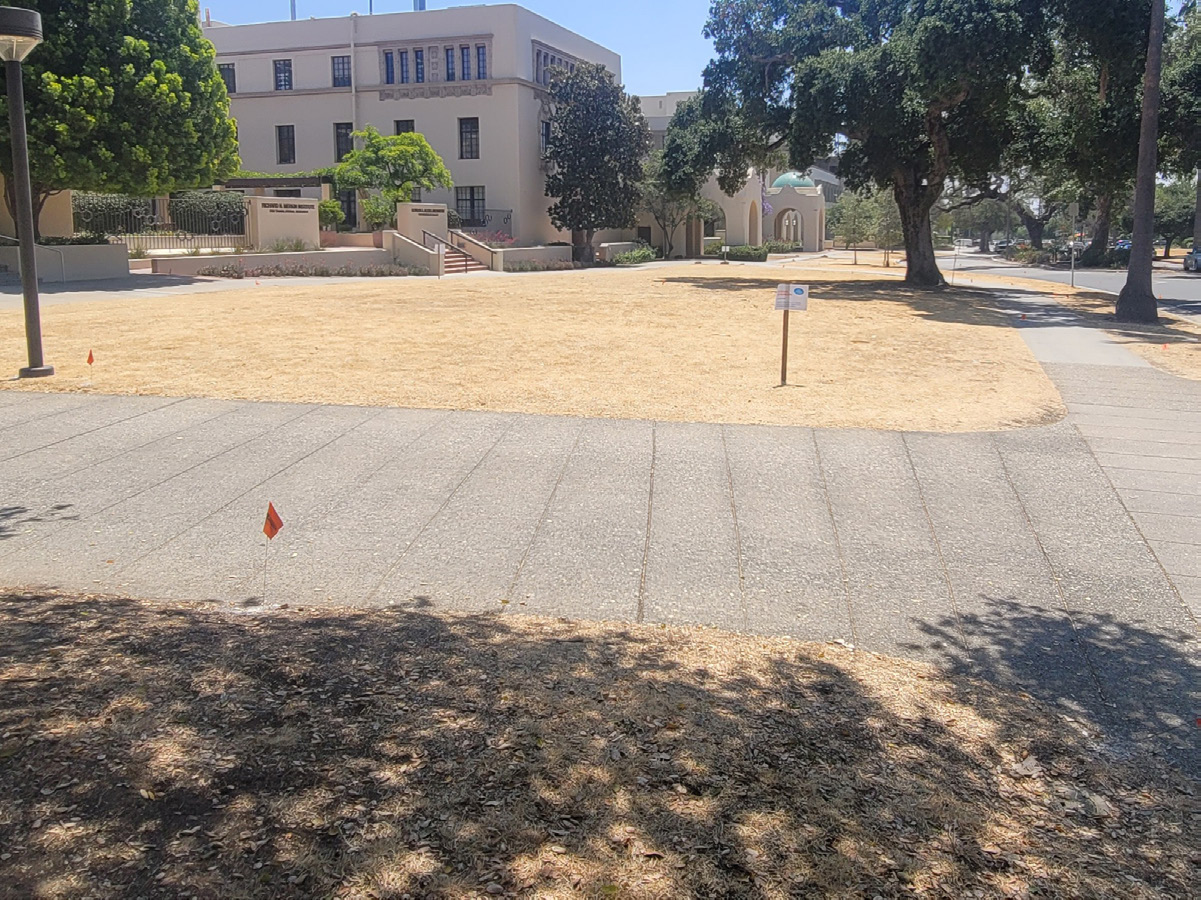
Figure 1. (Photo: Michael Gutierrez)
Frequent passersby of southwest campus will have noticed a recent shift in the landscape along Wilson Avenue. Large areas of grass have turned brown and crispy, in apparent contrast with the springtime bloom of the surroundings (Figure 1). While it may look unsightly now, this is only the first step in a multi-year project by the Caltech Facilities department to restore this land’s original, natural beauty.
Grass turf is typically imported in the form of pre-grown sod for landscapes found around Caltech and Pasadena — it does not grow natively in southern California. Caltech alone uses tens of millions of gallons of water annually to maintain its various lawns and greens (Figure 2), many of which are non-functional (serving only aesthetic purpose). Despite irrigation accounting for less than 10% of total campus water usage, the Caltech Sustainability Council has identified it as one of the easiest targets for immediate reduction, thanks in part to the L.A. Department of Water and Power’s turf replacement rebate program.
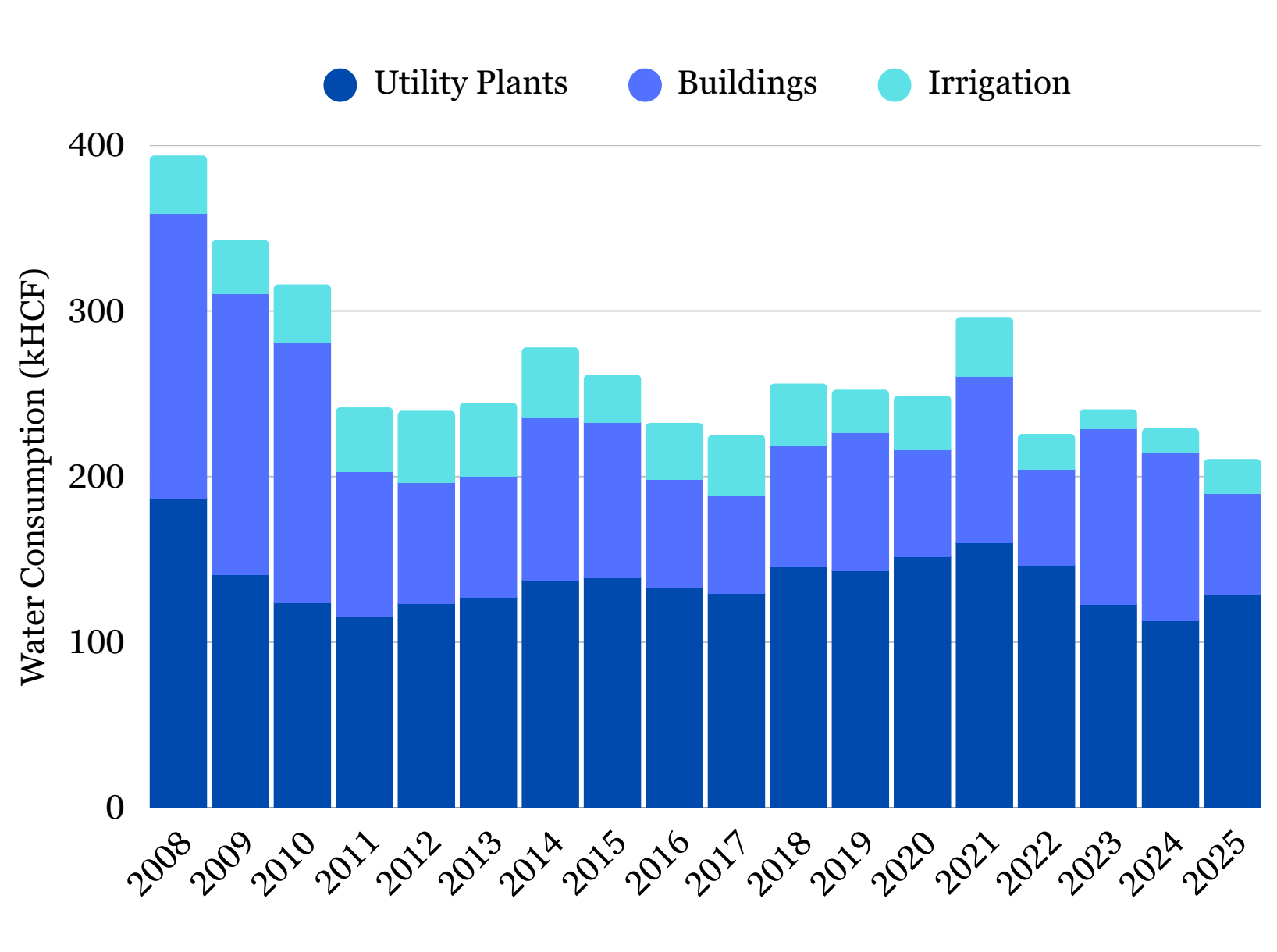
Figure 2. 100 kHCF = 78.4 million gallons. (Image: 2025 Caltech Annual Sustainability Report, p. 12.)
According to Caltech Buildings & Grounds Director Delmy Emerson, campus has been approved for approximately 90,000 sq. ft. at $4 per sq. ft. to remove non-functional turf and transition the areas to sustainable landscape. This will save about 2 million gallons of water per year. LADWP’s rebate program requires the project to be completed within 180 days of approval, Emerson explained, so the lawns on Wilson Ave. were sprayed with grass killer to speed the removal. While this area is the current priority, there are several other locations on campus slated for topsoil makeover (Figure 3).
“The sustainable projects will have California friendly/drought tolerant plants, swale to capture rainwater, low fire rating plants, increase tree canopy, and low maintenance requirements,” Emerson told the Tech (see Figure 4).
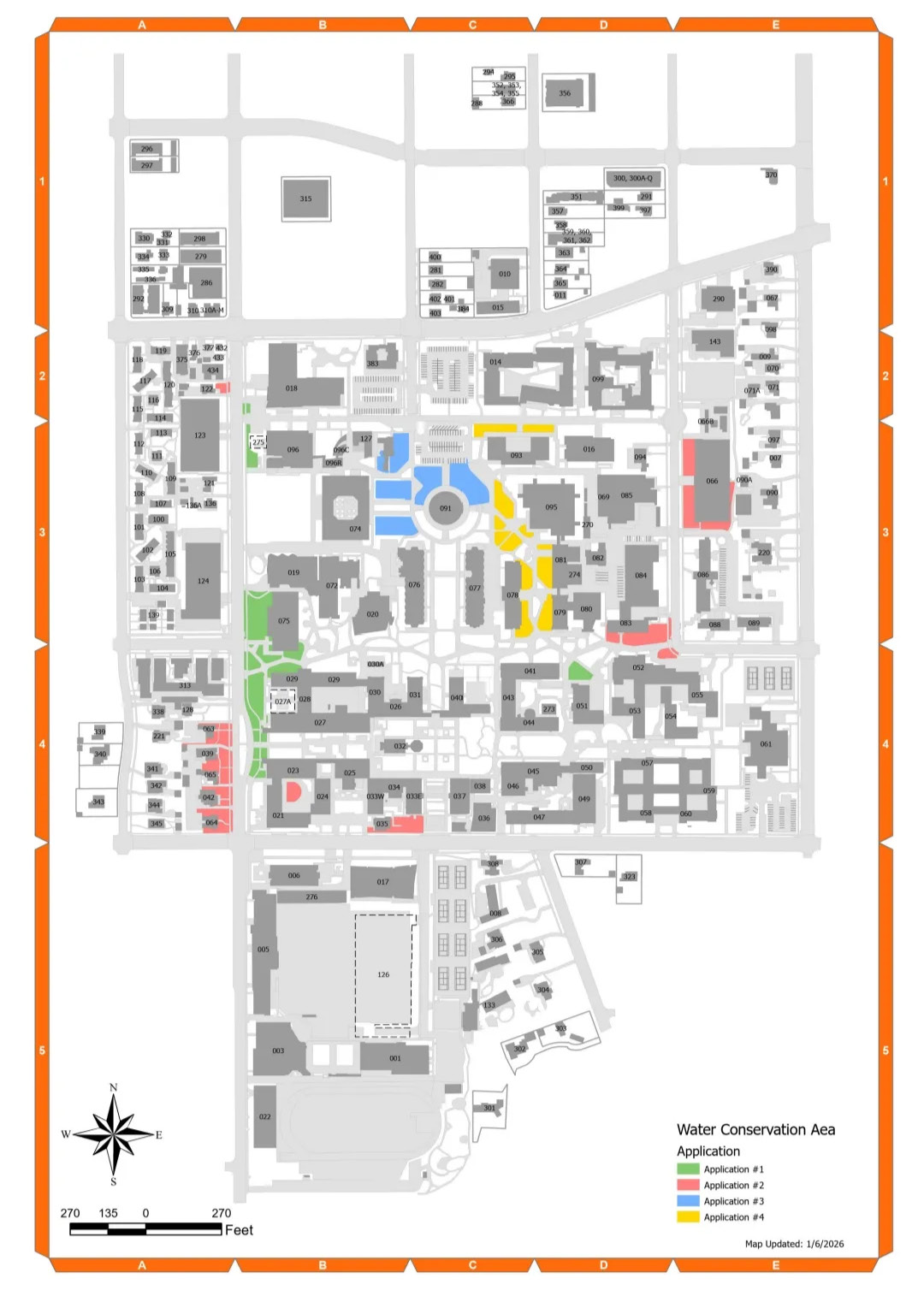
Figure 3. Map of campus areas planned to be transformed. (Image: Max Christman, Associate Director of Sustainability)
Max Christman, Assistant Director of Sustainability, added, “In the coming months, those spaces will be transformed with more trees, native vegetation, and natural features.”
While the overall impact on campus water consumption is marginal, the new landscapes are a visible and symbolic step toward coexistence with the natural world, rather than fighting against it.
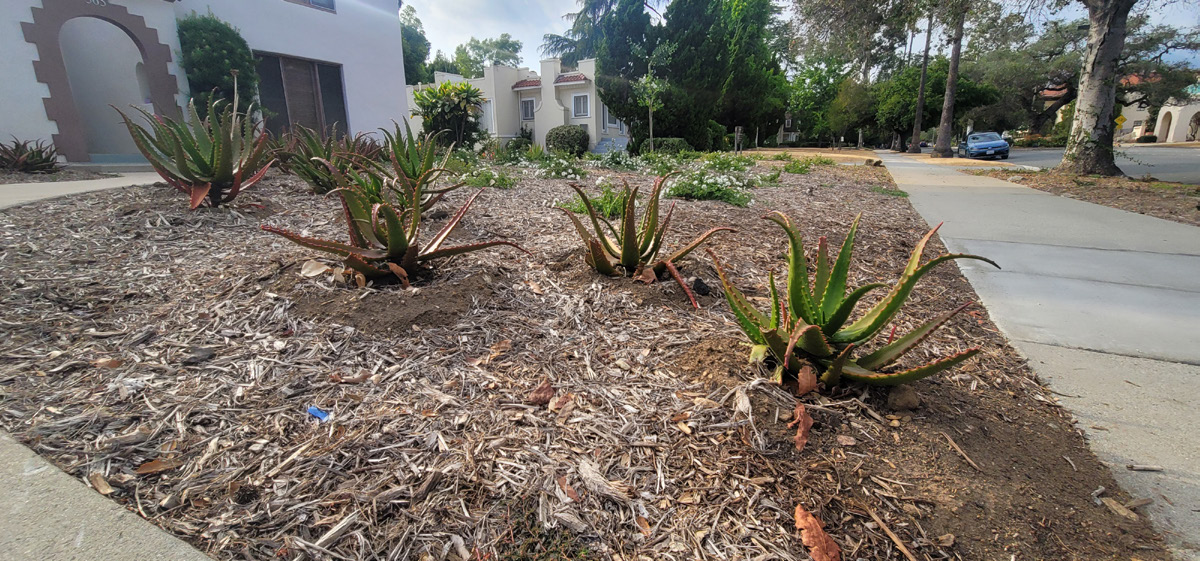
Figure 4. Some areas on campus, like the front lawn of the Audit Services and Institute Compliance Office on California/Wilson, have been finished already. (Photo: Michael Gutierrez)