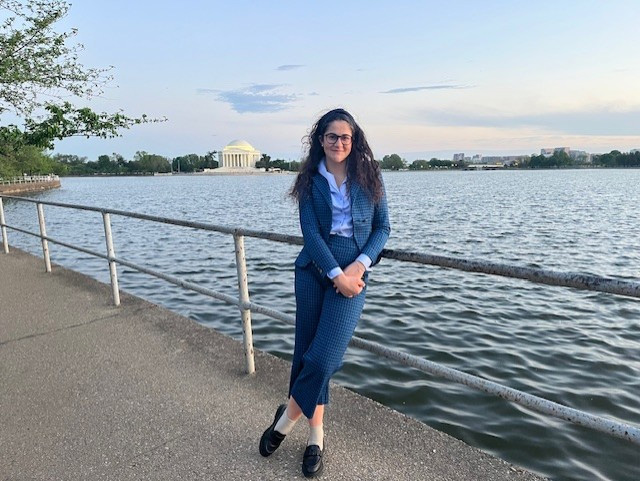
CASE Workshop 2026: Beckman Political Award — The Little Italian Girl Heads to Washington, D.C.
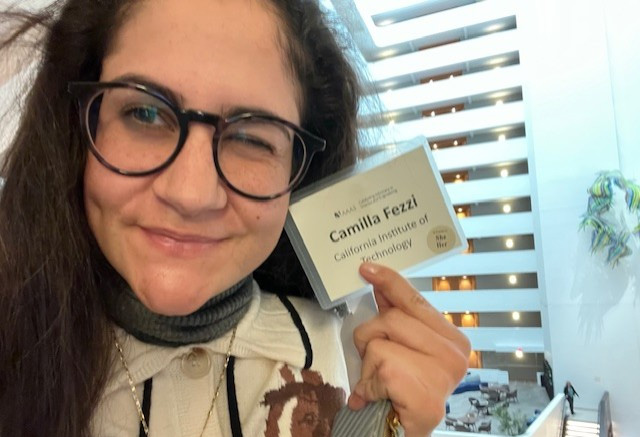
When I think back on my time in Washington, D.C., for the 2026 CASE Workshop, what returns to me first is not a talking point, or a statistic, or even a room. It is motion. It is the feeling of walking being surrounded by students from across the country who had come for the same reason: to understand how science survives in public life. And later, it is the feeling of riding a scooter through Washington at night, the memorials pale and almost unreal against the dark, and the whole city suddenly less like a system and more like a question.
I came to the CASE Workshop expecting to learn how science policy worked. I left feeling that I had brushed against something much larger: the fragility of institutions, the dignity of advocacy, and the belief in research at a moment when belief itself can feel politically contingent. The CASE Workshop is explicitly designed to teach students how science enters policymaking and how they can become voices for research throughout their careers, and it did for me not only intellectually, but on the level of identity.
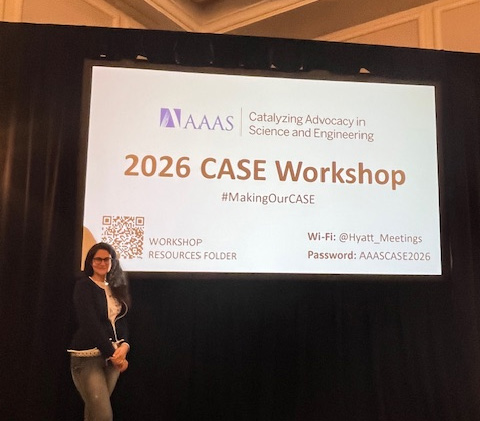
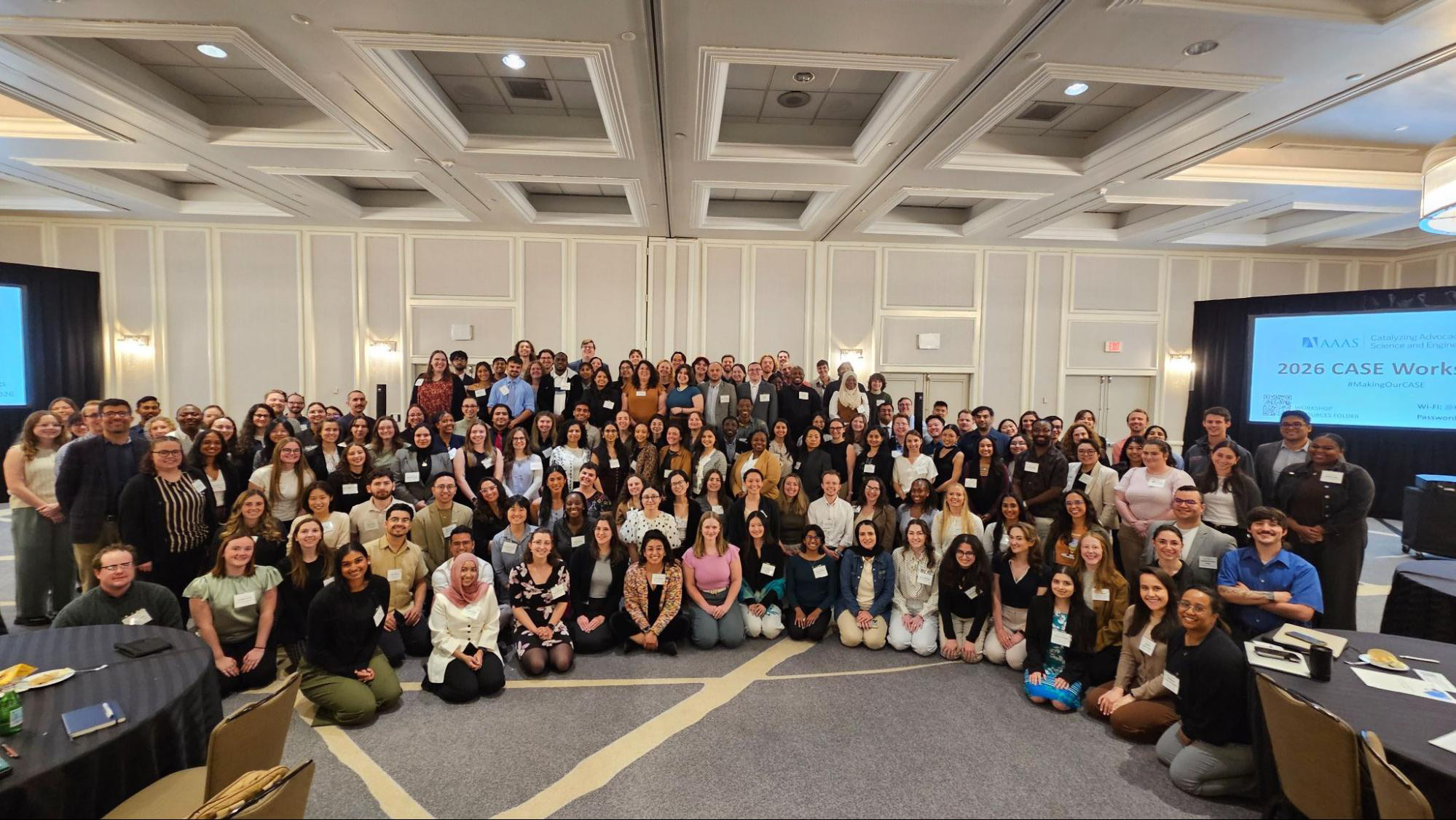
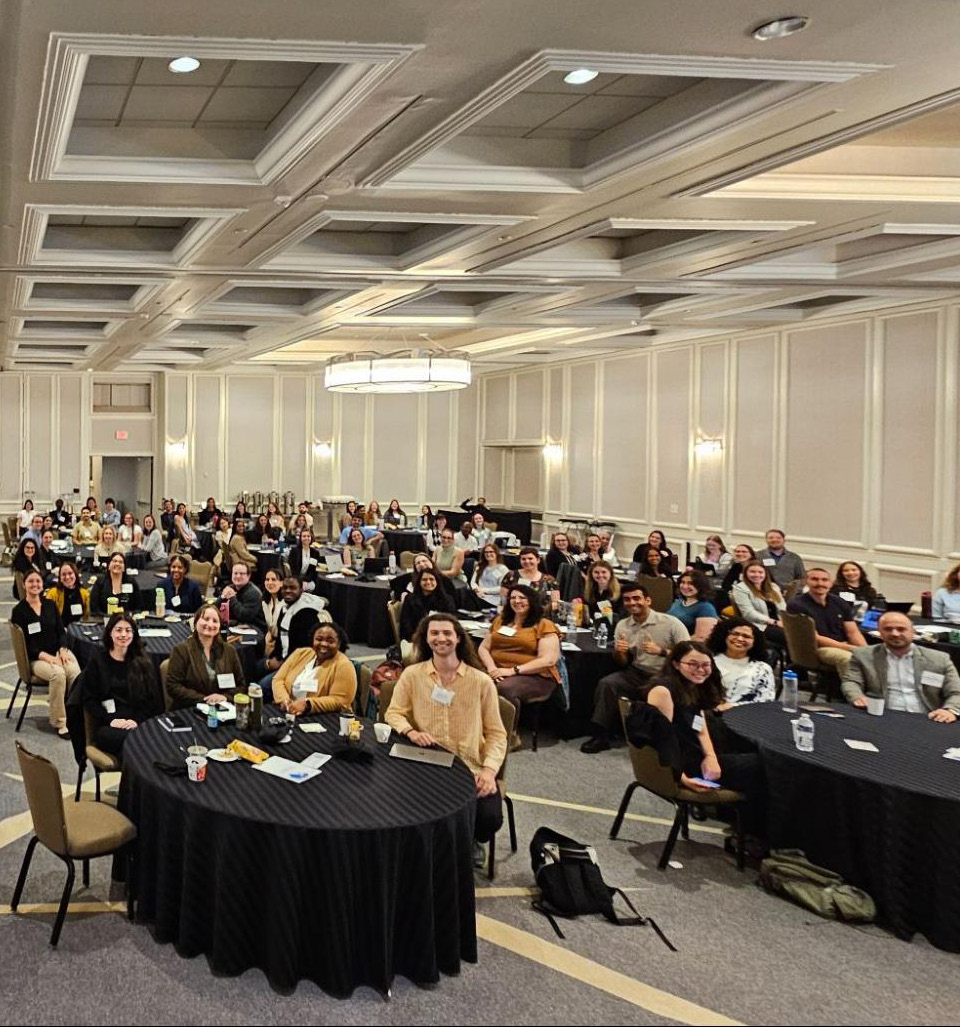
CASE is not built as a passive conference where students simply absorb information and return home impressed. It is built as a progression: first orientation, instruction, simulation, then public voice. Trust me when I say that it was a lot of work. Held in the Washington area from April 12 to 15, 2026, it brought together around 160 undergraduate and graduate STEM students from nearly 30 states, all sponsored by universities and organizations that believed it was worth sending young researchers into the machinery of federal policymaking.
From the opening evening at the Hyatt Regency Bethesda, there was a palpable current in the room — a mix of nervousness, seriousness, and a kind of moral excitement. In science, one is often taught to admire rigor and explanatory depth; in Washington, one begins to see how much depends on timing, language, coalition, and the willingness to remain articulate under pressure. CASE placed those worlds side by side and made us inhabit the distance between them.
Representing Caltech sharpened the experience for me. Caltech is small and intense, as well as stressful and extremely demanding. But standing in Washington under that institutional name made me understand something I had not fully appreciated before: even the most intellectually self-sufficient scientific community is not politically self-sustaining. No matter how brilliant the lab or how groundbreaking the theory, research still depends on a public architecture of trust and investment. It depends on appropriations bills, agency priorities, stable grant cycles, peer review systems, visa policies, congressional calendars, and the collective willingness of a nation to pay for futures it will not see immediately.
Spring 2026 was not a neutral backdrop. Just days before and around the workshop, science policy news was full of warning signs. AAAS urged lawmakers to reject the administration’s proposed FY2027 cuts to federal R&D, arguing that Congress had already rejected similarly catastrophic reductions for FY2026 and that it was imperative for already-appropriated funds to be used as intended so American science could maintain momentum. The language from AAAS was stark and revealing: funding, they insisted, should be driven by scientific opportunity and possibility, not politics. That sentence stayed with me because it captured the ambient tension of the moment.
And the numbers behind that anxiety were not abstract. In early April, the administration’s FY2027 proposal called for massive cuts across major research agencies: roughly a 54% cut to the National Science Foundation, a 47% cut to NASA’s Science Mission Directorate alongside a 23% cut to NASA overall, a 28% cut to NIST, a 13% cut to the Department of Energy’s Office of Science, and about a 10% cut to the National Institutes of Health; the AIP summary also noted no funding for NOAA’s research arm and cuts to basic research elsewhere in the federal system. Reading those figures while sitting in rooms full of young researchers had a particular emotional effect. Budget cuts can sound sterile when written as percentages. In person, they became legible as delayed careers, smaller cohorts, canceled experiments, closed possibilities, and quieter labs.
That is one of the things CASE made visible: the hidden emotional life of policy. Alessandra Zimmermann’s presentation on the federal R&D budget process did not sentimentalize anything. We moved through vocabulary that had once seemed remote to me. A continuing resolution, for example, is not merely a bureaucratic placeholder. In practice, it can feel like suspended breath. Labs wait. Hiring slows. Research plans become provisional. Students learn to live inside uncertainty without ever having chosen it. The presentation gave procedural clarity, but it also made visible the way policy becomes mood: hesitation in institutions, caution in investigators, quiet fear among trainees.
The budget negotiation exercise pushed that lesson further by forcing us to experience policymaking as a discipline of compromise rather than a theater of principle. In our simulation, groups of five or six had to produce a Commerce, Justice, and Science appropriations bill that could plausibly pass both chambers and reach the president’s desk. The scenarios differed — Democratic control, Republican control, divided government — but the lesson did not. The Senate filibuster threshold, competing party priorities, and the structure of appropriations all meant that no one got to inhabit moral purity for very long. Numbers had to move. Priorities had to be ranked. Gains in one place implied losses in another.
The exercise was sobering. It showed that governance is not the art of designing the best world from scratch; more often, it is the art of preventing damage, preserving capacity, and keeping enough of the future alive to fight for it again later. Scientists are trained to search for the best explanation. Policymaking often asks for the most survivable outcome. To feel that difference from inside a negotiation, even a simulated one, was to understand why advocacy requires stamina as much as conviction.
Toby Smith’s session made the cultural dimension of that challenge unforgettable. He described the divide between science and politics not simply as a disagreement over facts, but as a difference in habits of mind. Scientists are rewarded for precision and evidence. Politicians must navigate constituency, timing, narrative, and perception. Smith’s genius as a speaker was that he did not reduce either side to caricature. Instead, he treated translation as a form of respect. His phrases were practical enough to write down and durable enough to remember: all politics is local; all politics is personal; data is good, but stories are better; language matters. Smith helped me understand that storytelling, when done honestly, is not a betrayal of rigor. It is one of the forms rigor must take when it enters democratic life.
Glenn O’Neal’s talk added another essential dimension: visibility. He spoke about public opinion, trust, and the strange paradox that science can be widely valued and yet remain oddly faceless. He noted that most Americans support basic research and many trust scientists, but far fewer can name a living scientist or a research institution. The gap suggested that support for science, though real, can remain abstract unless people are able to connect research with human beings, voices, local communities, and shared futures. His insistence that scientists must “put a face on research” stayed with me because it made advocacy feel more like presence. Show up. Speak plainly. The idea was simple, almost embarrassingly simple, and maybe that is why it struck so deeply. If research is always represented as a system and never as a life, then its losses are easier to ignore.
By the time we reviewed the congressional visit materials, the workshop’s deeper logic had come into focus. They were teaching us how to convert private intellectual formation into public testimony. We were told to explain that we were among 160 STEM students who had come to learn about the role of science in policymaking, and to communicate that disruptions and uncertainty are hurting the scientific community and damaging American competitiveness. That phrasing was precise. The documents pointed to grant freezes, staffing disruptions, canceled funding, and the disproportionate damage such instability can inflict on students and early-career researchers. They also framed the issue in strategic terms: for more than 75 years, federal investment in research and development has helped build American prosperity, and that model cannot be treated as self-renewing. When I read those materials, I felt the strange compression that advocacy creates. One has to carry enormous systems inside small sentences.
What gave those sentences even more force was the broader evidence accumulating outside the workshop rooms. The AIP science policy update reported that NSF and NIH were lagging dramatically in grant awards, with NSF making awards at only a fraction of typical levels and NIH also well below previous years. At the same time, OECD data noted in that same briefing indicated that, adjusted for purchasing power parity, China had surpassed the United States in gross domestic spending on R&D in 2024. That combination — internal slowdown and external competition — felt like the atmospheric pressure around everything we were learning.
For me, as an international student, this context had another layer. It is one thing to study in the United States and admire its research culture from within the university. It is another to stand in its capital, during a moment of funding anxiety and political volatility, and feel how intimately national policy can press against private ambition. To be an international student in American science is often to live inside two stories at once. One is aspirational: the United States as a place where intellectual seriousness is rewarded, where laboratories are alive with possibility, where discovery has scale. The other is conditional: opportunity exists, but it is mediated by rules, politics, paperwork, and the moods of institutions. Washington made both stories visible at the same time.
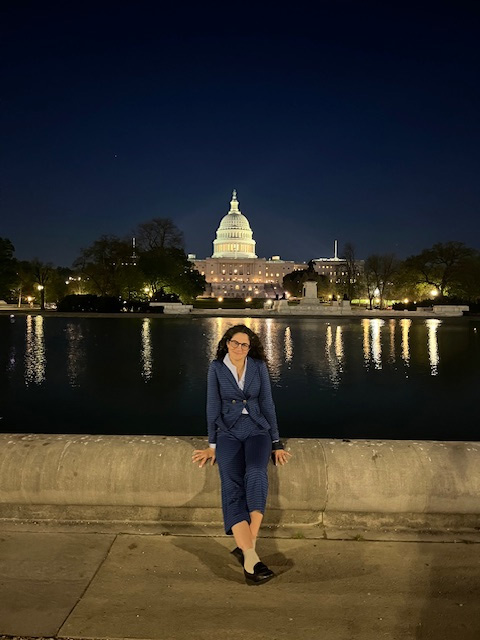
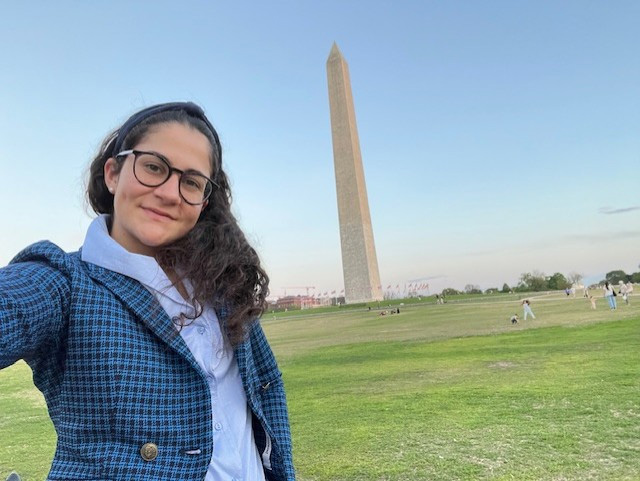
That may be why one of the most powerful parts of the trip happened outside the formal program. One night, after hours of policy slides and strategy and budget talk, I traveled around D.C. on a scooter. Moving past the memorials, I felt very far from home and very close to something I had wanted for a long time: the feeling of having crossed into a life I had once only imagined from elsewhere. When people say “the American dream,” the phrase can sound worn-out and theatrical. But on that scooter, I understood why the phrase survives. Not because America is uncomplicated or generous by default. It is not. But because it remains, for many people, a place where aspiration takes institutional form — where libraries, laboratories, fellowships, and universities create the possibility that an ordinary person from elsewhere might enter history not only as an observer, but as a participant. That is an emotional fact, even while also a precarious one.
I remember slowing down near the memorials and feeling a sudden fullness in my chest. Nothing dramatic happened. But I felt, with unusual clarity, that my life had crossed some invisible threshold. The workshop had taught me how research is funded, narrated, negotiated, defended. The city, that night, taught me why those things mattered to me personally.
Part of what made the moment so intense was the contrast between grandeur and uncertainty. The memorials suggest endurance. They are built to outlast administrations, headlines, and human impatience. But the science policy conversations of the week had been filled with shortfalls, delays, reversals, and threats. I thought about young researchers waiting on grants, faculty trying to keep projects alive, staff in congressional offices reading briefing memos, and students abroad deciding whether the United States still felt like the right place to build a future.
And yet the trip did not leave me cynical. If anything, it did the opposite. What I brought back from CASE was a more adult form of hope. Hope, as the workshop taught it, is not optimism detached from structure. It is disciplined attention joined to action. It is knowing that appropriations are messy, public opinion is unstable, language matters, and still deciding to show up prepared. It is realizing that the work of defending research is not only the work of famous scientists or senior administrators; it can also belong to students, postdocs, trainees, and those still learning how to speak in public without sounding smaller than what they know. Advocacy is part of how science remembers that it belongs to the public. It is part of how researchers honor the systems that make discovery possible. I felt called into a larger responsibility: to do serious science, yes, but also to speak for the conditions that allow serious science to exist.
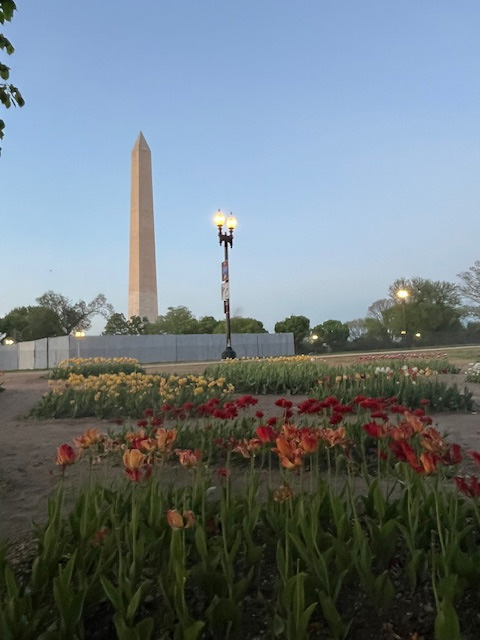
I came to Washington as a young scientist still learning what public life asks of intellectual work. I left with a sharper sense of the time we are in: a time of remarkable scientific possibility and equally remarkable institutional strain; a time when the United States is still one of the world’s great homes for research, but no longer able to treat that status as inevitable. CASE gave me tools, language, context, and confidence. But the truest thing it gave me was a scene I will keep returning to: Washington at night, the memorials standing in their white stillness, and me passing through on a scooter with all the fear, ambition, gratitude, and unfinished hope that a life in science can hold.
Thank you immensely, Caltech Y, for the honor of the Beckman Political Award.
All photos courtesy of Camilla Fezzi.